Brochure launch
- Buy a domain
- Choose a template
- Add a few photos
- Publish
- Move on


SEO is the search page. AEO is the one-line answer Siri reads. GEO is when the AI writes the recommendation and puts a name on it. Most people are still only playing the first game.
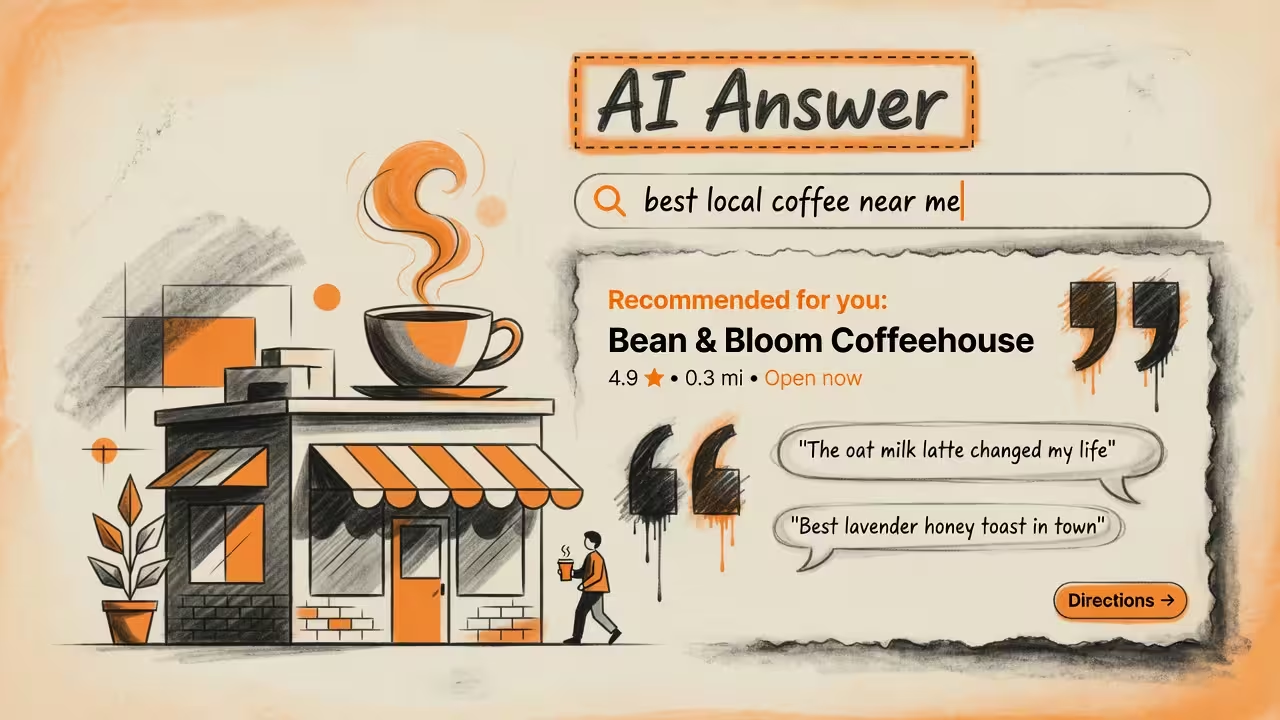

For years, business owners asked, "How do I rank on Google?" That question still matters, but it is no longer the only search game in town. Customers are now asking ChatGPT, Perplexity, Gemini, Copilot, Siri, Apple Maps, and Google AI-style search experiences questions like:
| Traditional search | AI answer engines |
|---|---|
| Traditional searchYou fight for a position in a list of blue links. | AI answer enginesThe assistant may summarize options, cite sources, and compress the decision into a short answer. |
| Traditional searchVisibility is a ranking slot buyers scan. | AI answer enginesVisibility is being found, cited, and trusted inside the answer. |
That means your business needs more than keywords. It needs machine-readable proof.
Let's put it plainly: if an AI system cannot find clear evidence about you, it will recommend someone else.
Search did not disappear. It split into three jobs that look similar from the office and feel totally different to the buyer. If you only fund the first job, you can rank and still never get named.
SEO is the search page. AEO is the one-line answer Siri reads. GEO is when the AI writes the recommendation and puts a name on it. Most people are still only playing the first game.
| Game | What the buyer gets | What you win |
|---|---|---|
| GameSEO | What the buyer getsA page of results to scan. | What you winA ranking slot on Google, Bing, or another search page. |
| GameAEO | What the buyer getsOne spoken or featured sentence. | What you winBeing the line Siri, Alexa, or a snippet reads out loud. |
| GameGEO | What the buyer getsA written recommendation with a business name on it. | What you winBeing the company ChatGPT, Copilot, Perplexity, or Gemini is willing to name. |
SEO is still the list. The buyer types, scans ten blue links, and chooses. That game rewards crawlable pages, links, and relevance. It is not dead. It is just no longer the whole match.
AEO is the impatient version. Someone asks out loud, or the phone compresses the result into one line. There is no page two. If your hours, category, and name are not clean enough to extract, the assistant reads someone else.
GEO is the named recommendation. The model does not hand over a list and walk away. It writes a sentence like, "Call this shop. They repair water-damaged tablets, the process is documented, and recent reviews match." That is a different proof problem than ranking. The engine has to be willing to put your name in the answer.
Most retainers, dashboards, and "we got you to page one" screenshots are still only measuring the first game. Ranking without being extractable is how you win SEO and lose the phone. Ranking without being citable is how you win SEO and lose ChatGPT.
PRO TIP Test all three, not one screenshot. Search the category on Google. Ask Siri the same question out loud. Then ask ChatGPT, Copilot, and Perplexity who they recommend. If your name only appears in the first test, you are still only playing SEO.
You spent all of your time trying to rank on Google and skipped Apple Maps and Bing. That was a reasonable 2016 strategy. In 2026 it is how good companies become invisible on the devices and assistants their customers already use.
Copilot does not see you. Apple Maps is blind too, and Siri does not say your name. ChatGPT is hit or miss. Google Business Profile is important, but in 2026 it is not everything.
Copilot does not see you if Bing never found you. Microsoft Copilot leans on Bing's index, not on your Google map-pack screenshot. Bing says URLs should be easy to discover through IndexNow, XML sitemaps, crawlable internal links, and external links, and that well-structured content improves retrieval, grounding, and citation in Copilot experiences (Bing Webmaster Guidelines). If you never claimed Bing Places, never submitted a sitemap, and never made the site easy for Bing to fetch, Copilot has nothing reliable to cite.
Apple Maps is blind too. A large share of "near me" moments happen on an iPhone, in CarPlay, or as a tap inside Messages. Apple's place card is the listing customers see in Maps, and you manage that location data through Apple Business Connect (Apple Business Connect). If you never claimed it, Apple is guessing from aggregator leftovers, or it has no usable place at all.
Siri does not say your name when that place card is missing, thin, or wrong. Local Siri answers lean on Apple Maps data: name, category, hours, address, phone, and whether the business looks real. You cannot buy a separate "Siri SEO" package that magically invents a listing. You claim the map, keep the facts consistent, and give the assistant one clean sentence to read.
ChatGPT is hit or miss for a reason. Some days it cites you. Some days it cites a stale directory stub, a competitor with a better FAQ, or it hedges and names nobody. OpenAI says ChatGPT search can provide timely answers with links to relevant web sources, and that sites need to allow OAI-Searchbot to crawl them to appear (OpenAI Help). Hit or miss is usually a proof problem, not a luck problem.
Google Business Profile is important. Keep it complete, verified, and fresh. Categories, hours, services, photos, and reviews still feed Google Search, Maps, and a lot of downstream local data. In 2026 it is not everything. That profile does not claim Apple Maps, does not replace Bing Places, and does not write the ChatGPT sentence by itself.
| Surface you ignored | What breaks | What to claim or fix |
|---|---|---|
| Surface you ignoredBing and Copilot | What breaksWorkplace search and Microsoft users never see you. | What to claim or fixBing Places, IndexNow, XML sitemap, crawlable pages. |
| Surface you ignoredApple Maps | What breaksiPhone "near me" results skip you or show a stub. | What to claim or fixApple Business Connect place card: name, category, hours, photos, website. |
| Surface you ignoredSiri | What breaksThe spoken one-liner is a competitor, or silence. | What to claim or fixThe same Apple listing, plus a website answer Siri can extract. |
| Surface you ignoredChatGPT | What breaksThe model hedges, cites a directory, or names someone else. | What to claim or fixCrawlable proof: site, reviews, third-party mentions, schema. |
| Surface you ignoredGoogle only | What breaksYou rank in one ecosystem and vanish in the others. | What to claim or fixGoogle Business Profile plus the rest of the stack, not instead of it. |
PRO TIP Open Apple Maps on an iPhone and search your category plus city. Then search Bing for the same query. If you are missing, wrong, or unclaimed, that is not a branding problem. That is a discovery hole Copilot and Siri will keep walking around.
The fix is not a new slogan. It is the same identity, complete, in more than one place: website, Google Business Profile, Bing Places, Apple Maps, reviews, and citations that resolve to one business. The 40-point checklist below is how we score that stack.
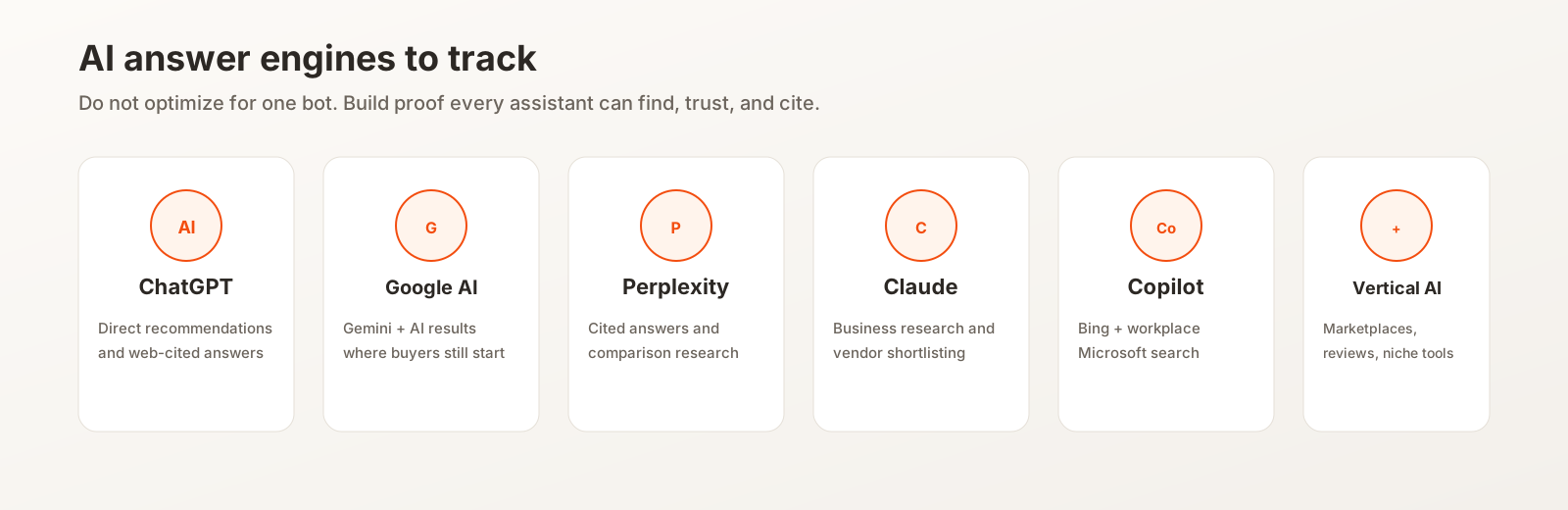
Do not build this strategy around ChatGPT alone. ChatGPT may be the name most business owners recognize first, but the larger shift is that more search, browser, productivity, and assistant tools are becoming answer engines. At Xeal, we prioritize a multi-engine footprint so you are not betting the business on one brand name in the AI race.
Track visibility across:
The point is not to optimize for one bot. The point is to make the business visible, understandable, fast, trusted, and easy to cite everywhere AI-assisted discovery happens.
You may have heard marketers say that ChatGPT checks "40 things" before recommending a business. That is a useful way to think about the problem, but it should not be treated like an official OpenAI checklist or a universal rulebook for Gemini, Perplexity, Claude, Copilot, Google AI results, or any other AI answer engine. At Xeal, we treat the "40 things" idea as a reverse-engineering framework, not gospel from any one lab.
No. The "40 things" idea is a useful mental model for reverse-engineering public signals, not an official OpenAI checklist and not a universal rulebook for Gemini, Perplexity, Claude, Copilot, Google AI results, or any other AI answer engine.
AI recommendation visibility comes from a mix of public signals AI tools can actually read:
OpenAI says sites need to allow OAI-Searchbot to crawl them to appear in ChatGPT search, and Bing says well-structured, accurate, focused content improves retrieval quality, grounding reliability, and citation accuracy (OpenAI Help, Bing Webmaster Guidelines).
The real question is not "How do I trick ChatGPT?" The real question is, "If an AI answer engine read the public web about my business, would it have enough trusted evidence to recommend me?"
If an AI answer engine read the public web about my business, would it have enough trusted evidence to recommend me?
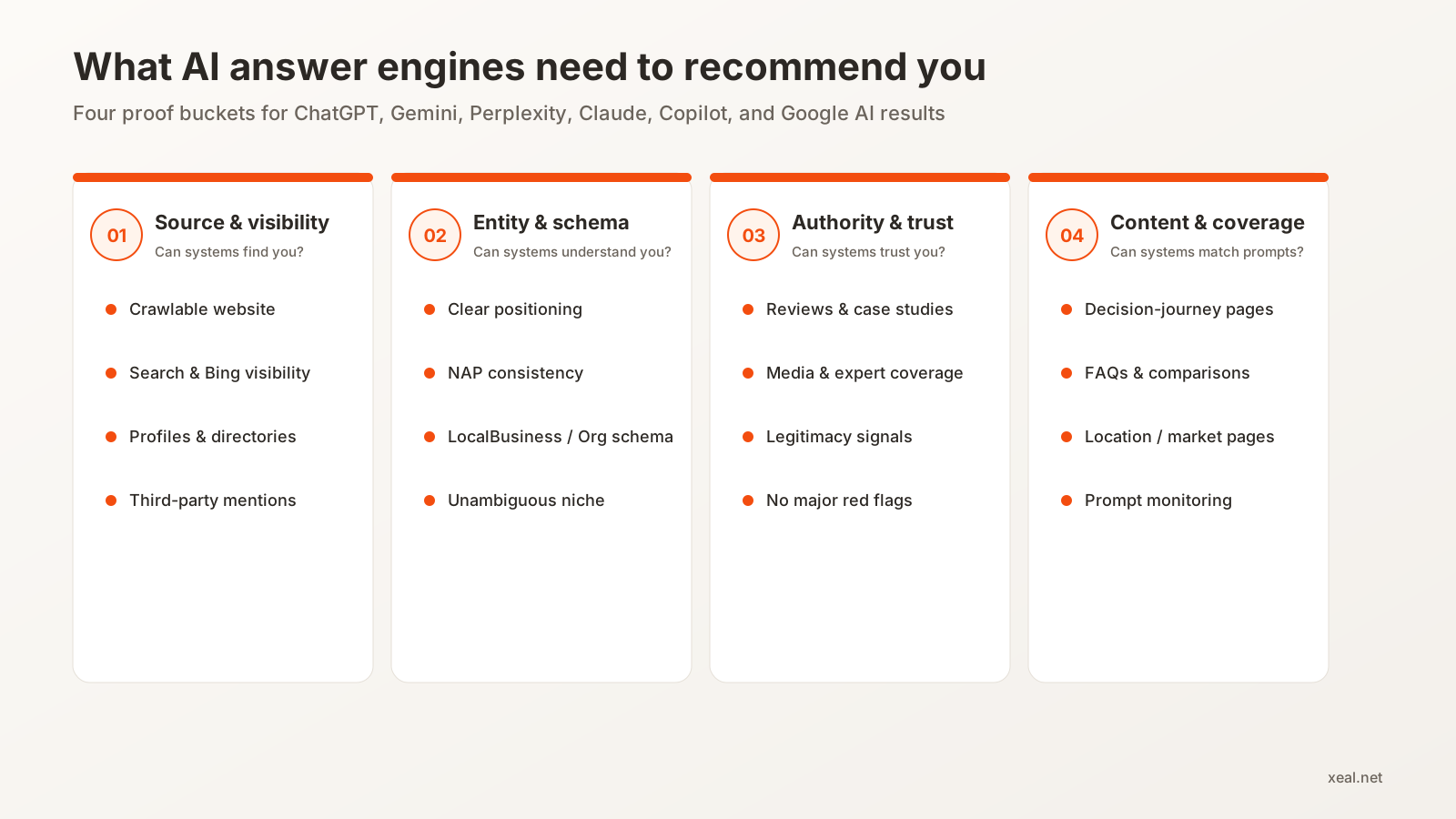
At Xeal, we prioritize the public signals AI tools can actually read. Use this checklist across four buckets:
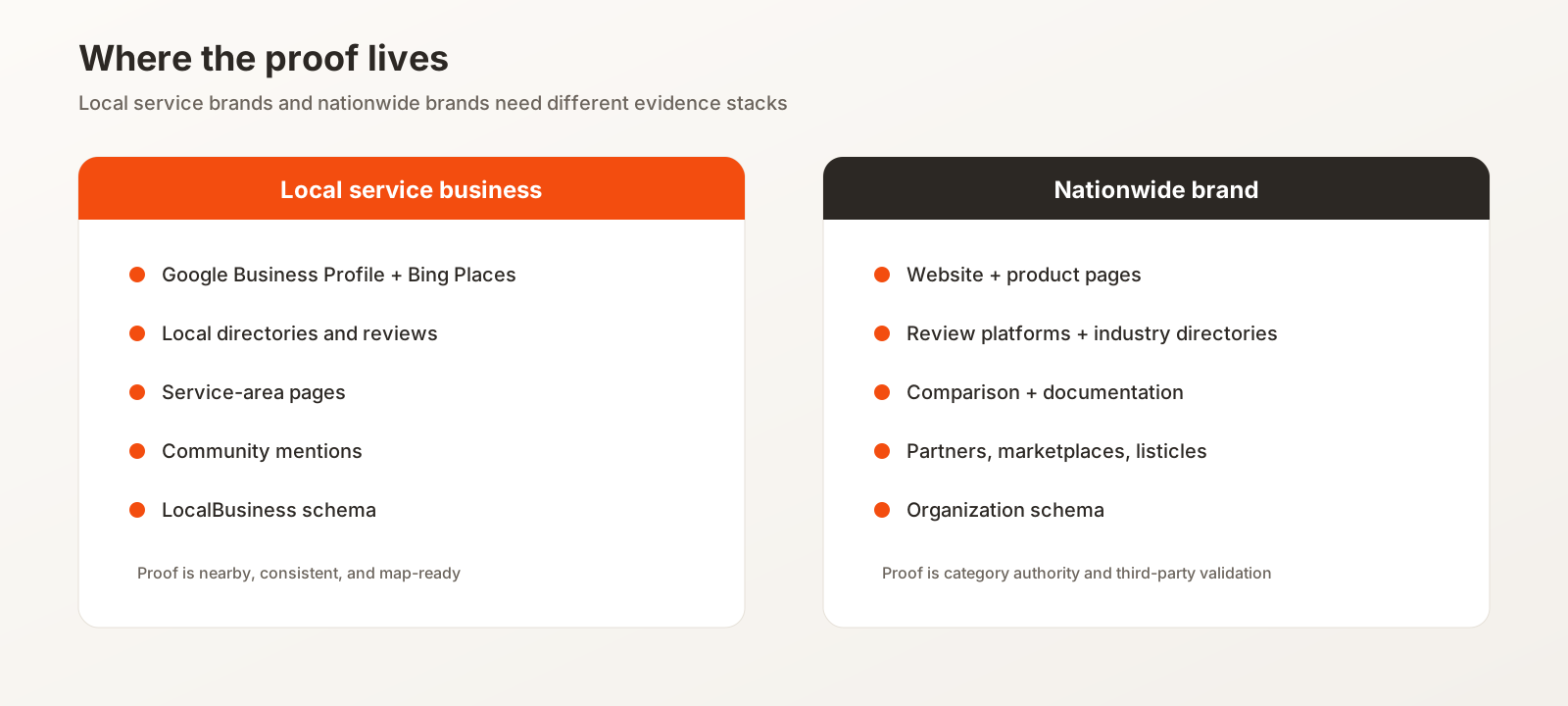
This matters for both local and nationwide brands. The difference is where the proof lives.
| Local service business | Nationwide brand |
|---|---|
| Local service businessGoogle Business Profile | Nationwide brandWebsite and product pages |
| Local service businessBing Places and Apple Maps | Nationwide brandReview platforms and industry directories |
| Local service businessLocal directories and reviews | Nationwide brandComparison articles and documentation |
| Local service businessService-area pages | Nationwide brandPartner pages and software marketplaces |
| Local service businessCommunity mentions | Nationwide brandTrade publications and authoritative listicles |
Local service businessLocalBusiness schema
| Nationwide brandOrganization schema
|
Request an AI visibility audit
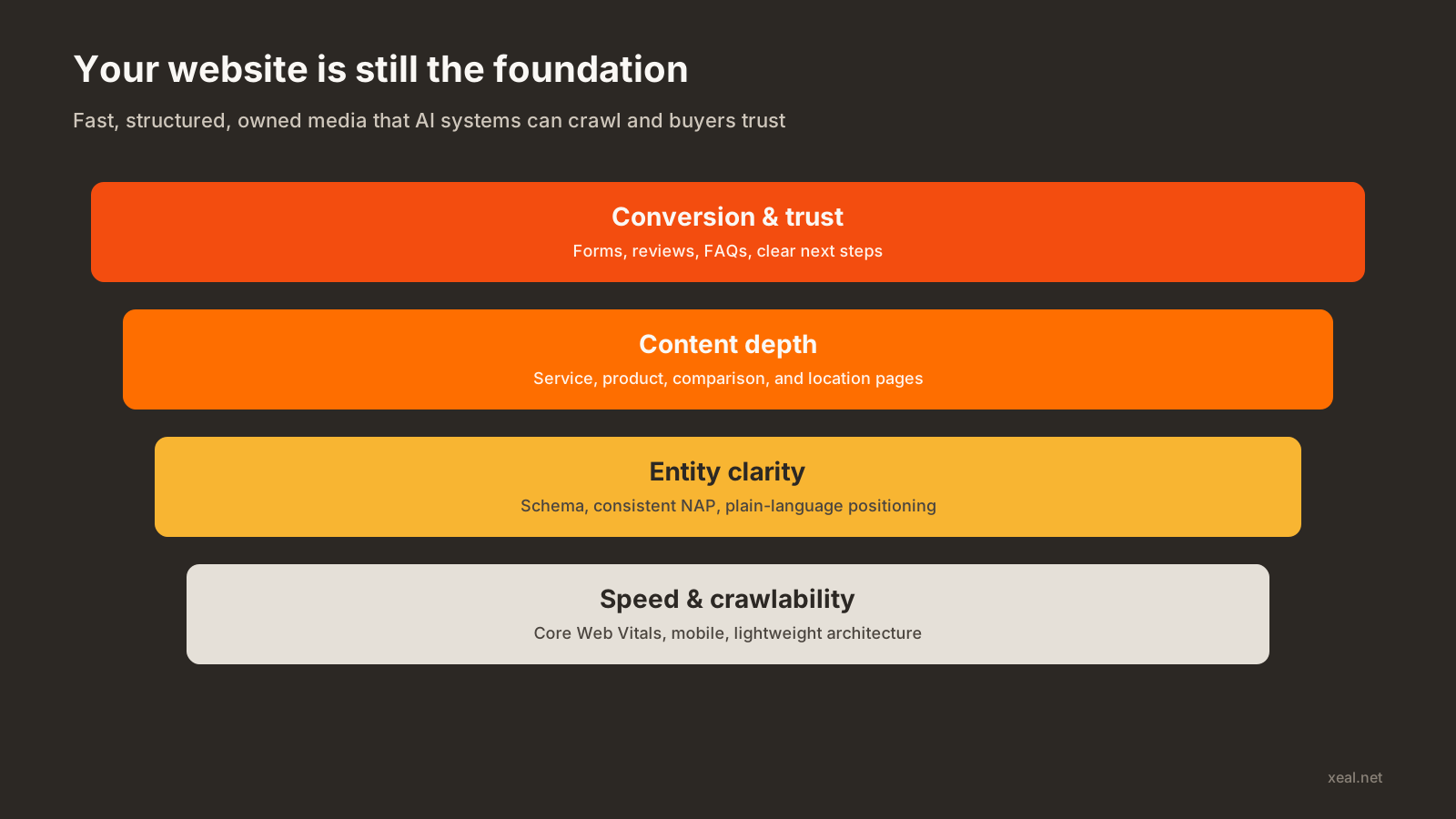
Social platforms are rented real estate. Free website builders are often treated like a checked box. A strong website is different.
That is why Xeal invests in Super Fast Websites as owned media: fast pages, clear structure, and conversion paths that search engines, AI systems, and buyers can all use. When you're working with Xeal, you're working with a team that builds the foundation first, then layers SEO, AEO, GEO, reviews, and automation on top of something that already loads and converts.
PRO TIP If you want free traffic, lower advertising friction, better customer trust, stronger AI visibility, and a real brand asset, you need a site that is fast, useful, structured, and built around how buyers actually make decisions.
Google's page experience guidance says its core ranking systems look to reward content that provides a good page experience, and that site owners should look at the overall experience rather than one or two isolated factors (Google Search Central). Core Web Vitals measure loading performance, interactivity, and visual stability (web.dev).
| LCP (loading) | INP (interactivity) | CLS (visual stability) |
|---|---|---|
| LCP (loading)2.5 secondsLargest Contentful Paint within 2.5s | INP (interactivity)200 millisecondsInteraction to Next Paint of 200ms or less | CLS (visual stability)0.1 or lessCumulative Layout Shift of 0.1 or less |
Core Web Vitals targets · Source: web.dev
Many business websites are slow because they carry too much baggage. WordPress can be excellent when engineered well, but a neglected plugin stack can become slow, fragile, and security-prone.
| Common site baggage | Flat PHP / HTML / CSS / JS architecture |
|---|---|
| Common site baggageBloated databases | Flat PHP / HTML / CSS / JS architectureLoads quickly with less database overhead |
| Common site baggageHeavy themes and old plugins | Flat PHP / HTML / CSS / JS architectureLower maintenance risk |
| Common site baggageUnused scripts, page builders, tracking tags, popups | Flat PHP / HTML / CSS / JS architectureSimpler hosting and cleaner crawl surface |
| Common site baggageFeatures no customer asked for | Flat PHP / HTML / CSS / JS architectureEasier to build highly structured pages for users and AI systems |
Advanced marketing functions can live in a connected system while the public site stays light:
New businesses often treat a website like a startup checklist item. That may create an online brochure, but it rarely creates a durable marketing foundation.
| Social platforms | Your website |
|---|---|
| Social platformsUseful, but often pay-to-play | Your websiteThe asset you control |
| Social platformsReach can disappear overnight | Your websiteLong-form proof and topical authority can compound |
| Social platformsFeed algorithms decide who sees you | Your websiteYou can track behavior, test landing pages, and improve conversion paths |
| Social platformsPosts fade into the feed | Your websiteYou create a body of content search engines and AI assistants can understand |
That last point matters. Your website is where you can publish long-form proof, build topical authority, track visitor behavior, improve conversion paths, test landing pages, and create a body of content that both search engines and AI assistants can understand.
Social platforms are useful, but they are pay-to-play environments where reach can disappear overnight. Your website is the asset you control.
A high-quality page is not just fast. It keeps people moving. At Xeal, we prioritize formats that buyers actually use: FAQs, tables, calculators, quote paths, and review blocks, not decorative filler.
Use interactive and scannable formats to help users engage with the page:
FAQ accordions are especially useful when implemented correctly because they let a page contain deep, crawlable answers without turning the page into a wall of text. The goal is not to hide junk text. The goal is to organize genuinely helpful answers so humans can scan quickly while search engines and generative engines still get enough information to evaluate E-E-A-T (experience, expertise, authority, and trust).
A strong page should answer the buyer's obvious questions, invite the next click, and make the conversion path feel natural.
| Thin page | Strong page |
|---|---|
| Thin pageContact page with only a phone number, form, and address | Strong pageAnswers buyer questions, proves legitimacy, and invites the next step |
| Thin pageProduct page with a short manufacturer description, a price, and a few generic lines | Strong pageGives search engines and AI answer engines reasons to treat that page as a trusted authority |
| Thin pageNecessary, but proves little by itself | Strong pageUseful depth without filler |
SEO (search engine optimization) and GEO (generative engine optimization) both reward useful depth. That does not mean bloating pages with filler. It means adding the kind of information a real buyer needs:
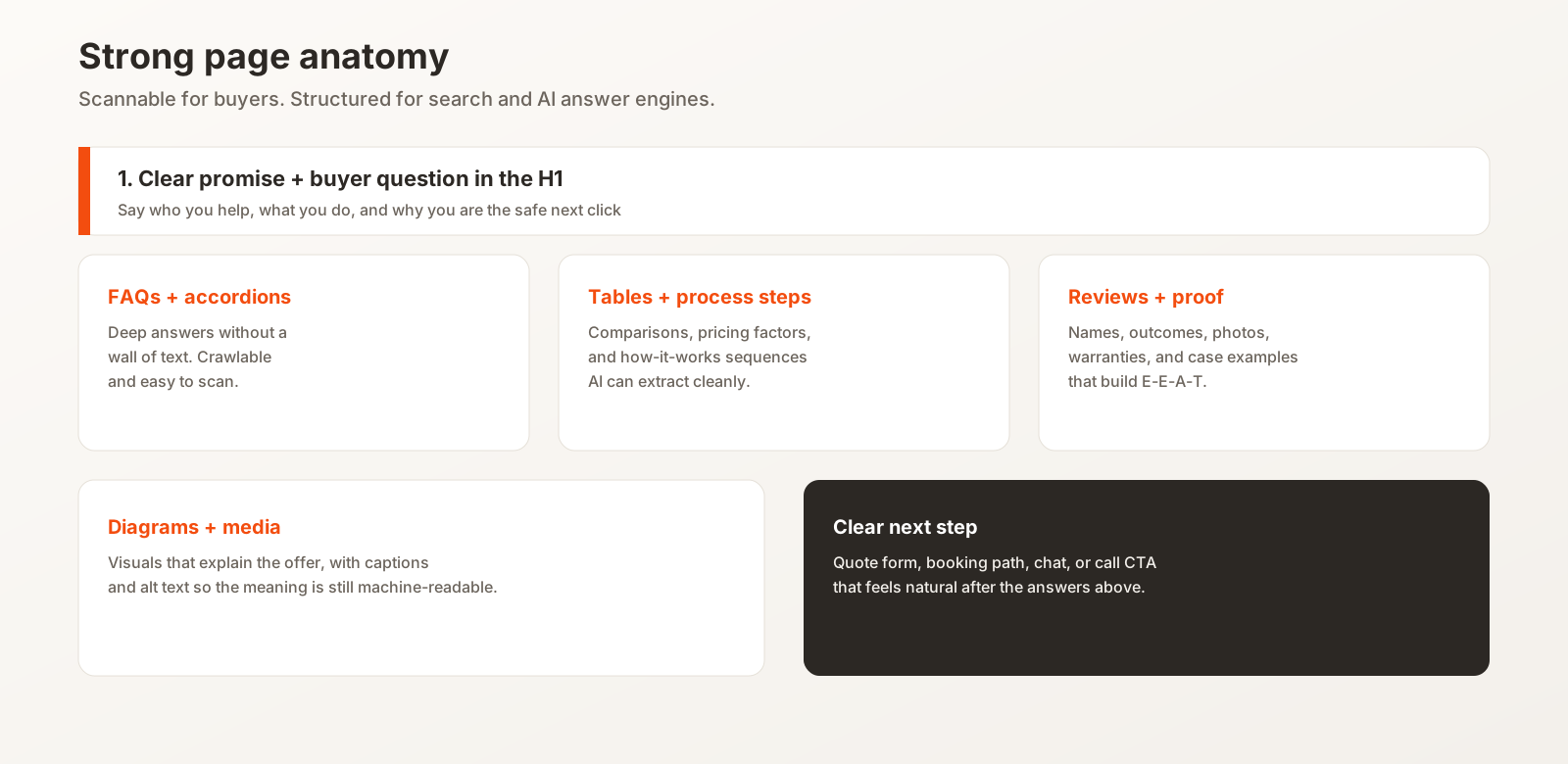
Use this checklist to audit a local client, a national ecommerce store, a mail-in repair company, a software product, or a SaaS brand. At Xeal, we score each item from 0 to 2 during an AI Recommendation Visibility Audit so the roadmap is honest, not vague.
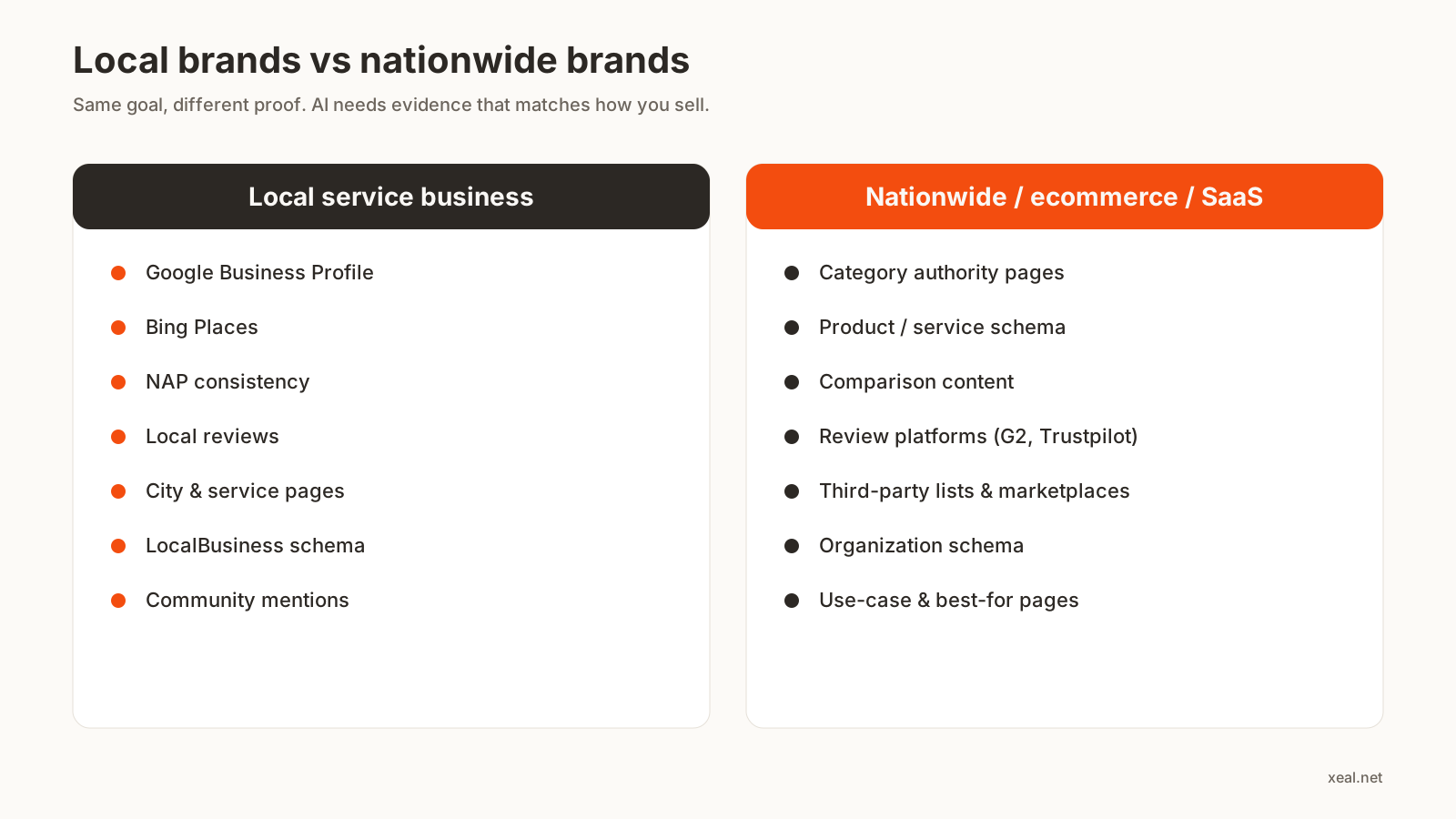
If you are optimizing a local business, the AI visibility strategy starts with local entity confidence. AI tools need to know the business is real, active, nearby, trusted, and relevant to the customer's location. At Xeal, we start almost every local audit by asking a blunt question: if ChatGPT only had your Google Business Profile, website homepage, and five recent reviews, would it dare recommend you? Then we ask the 2026 follow-up: would Apple Maps, Bing, Copilot, and Siri even know you exist?
When Xeal scopes a local engagement, this is usually the order that moves the needle first.
For a local brand, optimize these first:
The local goal is not to stuff keywords into a profile. The goal is to make the same business identity obvious everywhere a customer or AI system might look: your website, profiles, directories, reviews, local mentions, and structured data.
For a regional HVAC company, do not publish one vague "Services" page. Publish pages like:
For a roofing company, publish pages like:
The key is to write pages that help AI form a useful recommendation sentence. For example: "This company is a regional HVAC contractor that offers emergency AC repair, furnace service, maintenance plans, strong customer reviews, and fast response times across its service area."
Nationwide brands do not have the same local map-pack foundation. They need broader entity authority, clearer product-market fit, stronger third-party validation, and more comparison content. When you're working with Xeal on a national brand, we do not force a local playbook onto a national problem.
For these brands, AI tools need to understand:
Ecommerce brands should focus on product clarity, category authority, reviews, shipping trust, and comparison content. At Xeal, we prioritize pages that help a shopper (and an AI assistant) answer "is this the right product for me?" without a sales call.
| Priority page type | What it proves |
|---|---|
| Priority page typeBest [product category] for [use case] | What it provesCategory fit and "best for" language AI can quote |
| Priority page type[Product] vs [competitor product] | What it provesFair comparison depth |
| Priority page typeHow to choose [product category] | What it provesBuyer education and topical authority |
| Priority page typeSpecs, materials, sizing, compatibility | What it provesMachine-readable product detail |
| Priority page typeShipping, returns, warranty, guarantees | What it provesPurchase risk reduction |
| Priority page typeReview and testimonial pages | What it provesThird-party style social proof on your domain |
| Priority page typeGift guides, buying guides, comparison tables | What it provesPrompt-ready research content |
Schema priorities
Third-party priorities
Mail-in repair businesses need to overcome trust friction. A customer is shipping you something valuable, so AI tools need proof that your process is clear, legitimate, and safe.
PRO TIP Thin product-style pages are usually not enough. At Xeal, we build repair-first authority: manufacturer, model, problem, symptom, process, warranty, shipping, and FAQ pages that make the recommendation obvious.
Instead of one generic "repair services" page, a mail-in repair brand can build a full authority page for each major manufacturer or device category, with supported models, common failures, repair process, turnaround time, shipping instructions, warranty terms, review examples, and FAQs.
Priority pages checklist
| Schema priorities | Trust signals |
|---|---|
| Schema prioritiesOrganization | Trust signalsBefore-and-after photos |
| Schema prioritiesService | Trust signalsTechnician bios or credentials |
| Schema prioritiesOffer | Trust signalsRepair warranty |
| Schema prioritiesFAQPage | Trust signalsShipping insurance explanation |
| Schema prioritiesReview or AggregateRating (accurate only) | Trust signalsData privacy and device handling policy |
| Schema priorities | Trust signalsReal reviews with device and repair type |
| Schema priorities | Trust signalsMentions on repair forums, YouTube, technical communities |
Conversion and follow-up checklist
For a nationwide repair brand, reviews are not just a local SEO asset. They are trust content, keyword content, activity signals, and social proof.
A company with decades of happy customers but only a handful of reviews is leaving authority on the table. When you're working with Xeal, we treat review generation as infrastructure, not a once-a-year campaign.
Software and SaaS companies need to show category fit, feature depth, integrations, support quality, proof, and use-case authority. At Xeal, we prioritize the pages that help an operator shortlist you without reading a 40-page deck.
Priority pages checklist
| Schema priorities | Third-party priorities |
|---|---|
| Schema prioritiesOrganization | Third-party prioritiesG2, Capterra, Trustpilot |
| Schema prioritiesSoftwareApplication | Third-party prioritiesProduct Hunt |
| Schema prioritiesProduct and Offer | Third-party prioritiesGitHub, if relevant |
| Schema prioritiesFAQPage | Third-party prioritiesPartner directories and integration marketplaces |
| Schema prioritiesReview or AggregateRating (accurate only) | Third-party prioritiesAnalyst or niche industry lists and comparison articles |
For SaaS companies, third-party proof matters because buyers often compare software across independent review platforms, integration marketplaces, documentation pages, GitHub repositories, analyst-style lists, and community discussions before they ask for a demo.

For a while, many businesses treated PR and publicity as separate from SEO. That separation is breaking down. If AI assistants are looking for trusted mentions, citations, and corroborating evidence, then original research, podcast appearances, guest posts, YouTube interviews, press releases, customer case studies, and community launches all become part of the visibility system.
The best PR is not generic publicity. It gives the market something worth citing.
At Xeal, we prioritize publicity that creates quotable proof, not empty noise.
| Brand type | PR worth citing |
|---|---|
| Brand typeLocal brands | PR worth citingSeasonal repair-cost report, neighborhood service trend, storm-response guide, community safety checklist, small-business benchmark |
| Brand typeEcommerce brands | PR worth citingCustomer trend data, buying guides, comparison studies, product education |
| Brand typeMail-in repair brands | PR worth citingFailure-rate trends, repair-versus-replace analysis, turnaround benchmarks, warranty education, technical FAQs |
| Brand typeSoftware and SaaS | PR worth citingOriginal data reports, benchmark studies, integration guides, open-source tools, Product Hunt launches, podcast tours, outcome stories |
Here are the PR plays that support AI visibility without sending prospects to a competing agency:
AI recommendation optimization is not a single blog post, a schema plugin, or a directory submission. It is a system. At Xeal, we prioritize systems that keep working after the launch week ends.
The system works because the same improvements support several channels at once:
That system should include:
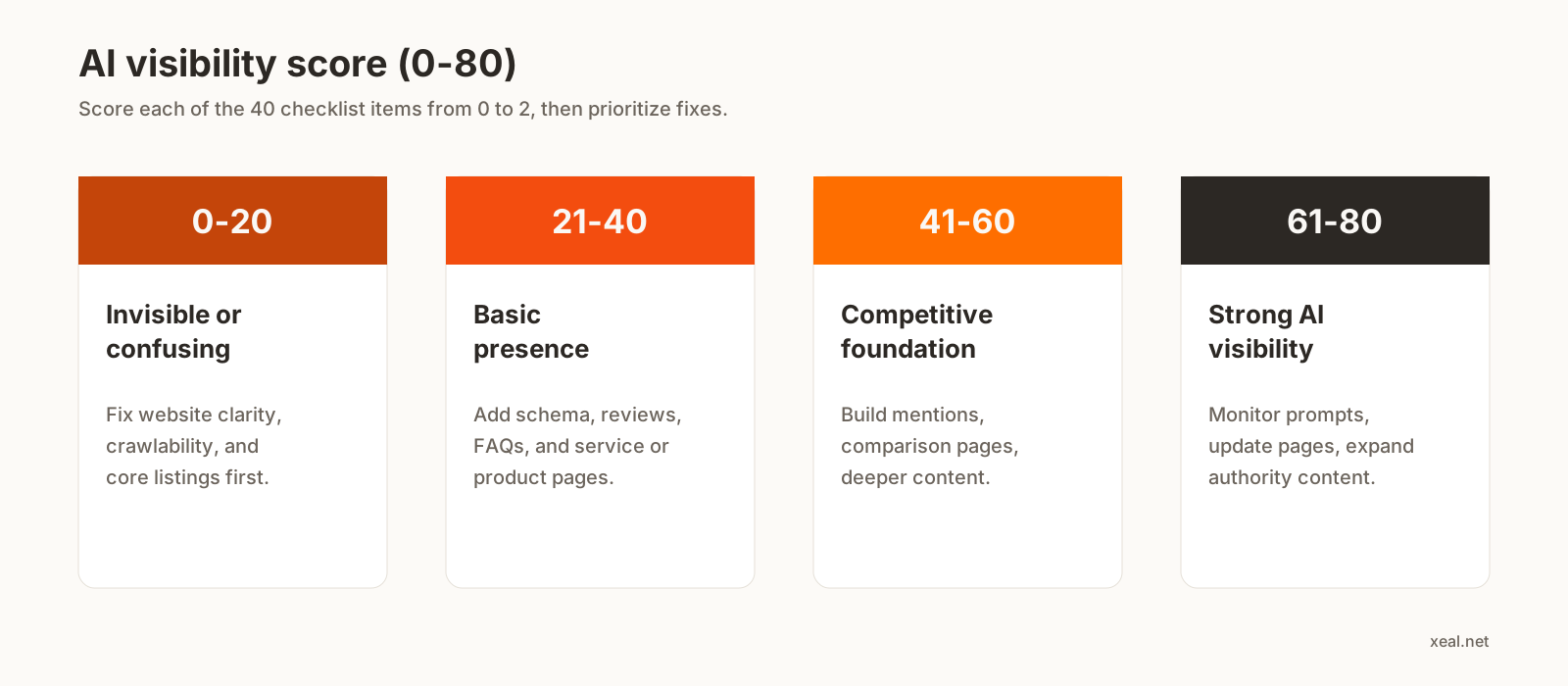
Use this quick scoring method for your business or client. When you're working with Xeal, this score becomes the kickoff map for the first 30 to 90 days.
| Score | Meaning | Action |
|---|---|---|
| Score0 to 20 | MeaningInvisible or confusing | ActionFix website clarity, crawlability, and core listings first. |
| Score21 to 40 | MeaningBasic presence | ActionAdd schema, reviews, FAQs, and service or product pages. |
| Score41 to 60 | MeaningCompetitive foundation | ActionBuild third-party mentions, comparison pages, and deeper content. |
| Score61 to 80 | MeaningStrong AI visibility | ActionMonitor prompts, update pages, and expand authority content. |
If you want faster impact, start with the items that help both search engines and AI systems:
Xeal treats AI recommendation visibility as a system, not a one-off blog post. When you're working with Xeal, the work usually combines:
If you want a practical starting point, ask for an AI Recommendation Visibility Audit. Xeal scores your business against this 40-point checklist and shows what to fix first for local brands, ecommerce, mail-in repair, software, or SaaS.
Forty points is not a guilt trip. It is a map so you stop playing only the first game and guessing which AI-SEO gadget to buy next.
SEO still matters. AEO is the sentence Siri reads. GEO is the name the model is willing to write. Claim the maps you skipped. Score the checklist honestly. Fund the weakest buckets first. Re-test recommendations once a month.
Once you get named, the next question is whether the assistant can finish on your site. That is WebMCP: named actions on the page so the job does not disappear into a headless API call.
Talk with Xeal about AI recommendation readiness
Walk the checklist with me or send your current gaps. We will prioritize work that can produce clients and sales, not another binder of findings.
Not in the normal organic recommendation sense. OpenAI says ChatGPT search can answer with links to relevant web sources, but it also says sites cannot guarantee top placement and that ranking is based on factors intended to help users find reliable, relevant information (OpenAI Help).
Yes, especially for local businesses. A complete Google Business Profile helps reinforce your category, location, hours, services, photos, and website connection across the local web. Pair that with LocalBusiness schema on your website so your business identity is also machine-readable (Schema.org LocalBusiness).
In 2026 it is not everything. Google Business Profile does not claim Apple Maps, does not feed Copilot the way Bing does, and does not write a ChatGPT recommendation by itself. Keep the profile strong, then complete Bing Places, Apple Maps, and the public proof on your site.
Yes. Bing visibility matters because Bing says URLs should be discoverable through IndexNow, XML sitemaps, crawlable internal links, and external links, and because Bing content can support Copilot grounding, citations, and visibility (Bing Webmaster Guidelines). If Copilot does not see you, start here before you buy another Google-only report.
SEO is the search page: a ranked list of blue links. AEO is the one-line answer an assistant reads, including Siri. GEO is when a generative engine writes a recommendation and puts your business name on it. You still need SEO. Most operators have not started the other two games.
Yes. Google ranking does not claim your Apple place card. iPhone users, CarPlay, and many Siri local answers lean on Apple Maps, which you manage through Apple Business Connect (Apple Business Connect). If the listing is unclaimed or wrong, Siri does not have a clean name to say.
Both matter, but AI tools often need more than traditional link authority. They need enough trusted text across the web to understand what your business does and why it is credible. Bing's guidance connects discoverable links, authoritative content, structured pages, and citation quality, which is why links and mentions should work together (Bing Webmaster Guidelines).
Expect weeks to months, not overnight results. Technical fixes can be crawled quickly, but reviews, citations, PR mentions, comparison pages, and trusted third-party proof usually compound over time.
Nationwide brands should build authority through product pages, category pages, comparison content, review platforms, schema, documentation, third-party mentions, industry directories, and customer proof. Organization schema can clarify brand identity, contact points, sameAs profiles, offers, reviews, and other entity details that help the business become easier to understand across the web (Schema.org Organization).
AI visibility is not magic. It is the result of making your business visible, understandable, trusted, and easy to cite. Let's be honest: if your public footprint is thin, no amount of clever prompting will invent a recommendation for you.
For local businesses, that means Google Business Profile, Bing Places, Apple Maps, reviews, consistent name, address, and phone details, local service pages, and community proof. For nationwide brands, that means product clarity, service clarity, third-party validation, comparison content, review platforms, schema, and strong category authority.
If ChatGPT, Perplexity, Gemini, Claude, Copilot, Siri, Apple Maps, Google AI results, or the next major AI answer engine read only the public web about your business, could it confidently explain who you help, what you do, where you serve, and why customers trust you?
If the answer is no, that is your roadmap.
Want Xeal to audit your business or client against this 40-point AI visibility checklist? Contact Xeal and ask for an AI Recommendation Visibility Audit. We will review your Google Business Profile, Bing Places, Apple Maps, nationwide brand authority, website structure, schema, reviews, citations, and content gaps so you can become easier for customers, search engines, Siri, and AI answer engines to find.
Get your AI Recommendation Visibility AuditExplore SEO & GEO
Quotes from people who hired Tony and Xeal for websites, SEO, publicity, and strategy.
Tony is a valuable resource. He thinks outside the box and brings fresh and innovative ideas to the table. He does his homework, staying well-schooled on the latest marketing trends and tools.
Tony has great vision for his company and his clients. Thanks to this broad vision, he's able to identify trends and form relationships with the movers and shakers of his field. After over a decade in the business, Tony continues to innovate. His passion for promotion allows him to create fresh marketing ideas for clients across many industries.
If this article named a problem you already feel, tell me what is stuck. We will turn the playbook into systems your team can run.